



ClickClaim.A Vianora AI product
Get my free audit

CLICK FRAUD RECOVERY FOR GOOGLE ADS

Your ads aren't broken. They're being robbed.

You changed the targeting. Rewrote the headline. Raised the budget. The number didn't move — because the problem was never your settings. About one in eighteen paid clicks is a machine. We find them, prove it click by click, and get the money back from Google.

No tag install for the audit — we work from the logs you already have. Our fee comes out of what we recover.

A phone leaking gold coins into a swarm of robotic cursor arrows

5.58%

of paid clicks were fraudulent

4.0 billion clicks measured, H1 2026 · Spider AF

$25.3B

lost to click fraud in six months

H1 2026 · Spider AF

2 months

is how long Google will credit you

Google Ads invalid-clicks policy

WHAT YOU HAVE ALREADY TRIED

You kept changing the settings. The fraud never cared.

Every fix below is the right fix — if the traffic is real. You have probably done most of them.

  • New keywords, tighter targetingSame spend. Same silence.
  • New ad copy, tested twiceClick-through went up. Sales didn't.
  • Higher bids for better positionsMore expensive clicks. Same result.
  • A new agency, or a new freelancerA new report. The same flat line.
  • More budget, in case the market changedThe budget just went faster.

An agency reads a flat account as a settings problem: the audience is wrong, the creative is weak, the landing page is slow. Usually the settings are fine. The clicks are not.

A wall of brass dials, one of them glowing gold

WHAT IS ACTUALLY HAPPENING

Someone is paying for your clicks, and it isn't a customer.

01

A machine clicks your ad

A script, a phone farm or a rented botnet opens your ad, lands on your site and leaves. No person was ever there.

02

Google charges you full price

To the ad platform a bot click and a buyer click look identical. You pay the same $3.70 either way.

03

Nobody was going to buy

There is no customer at the end of that click. Your budget bought nothing, and it will keep buying nothing.

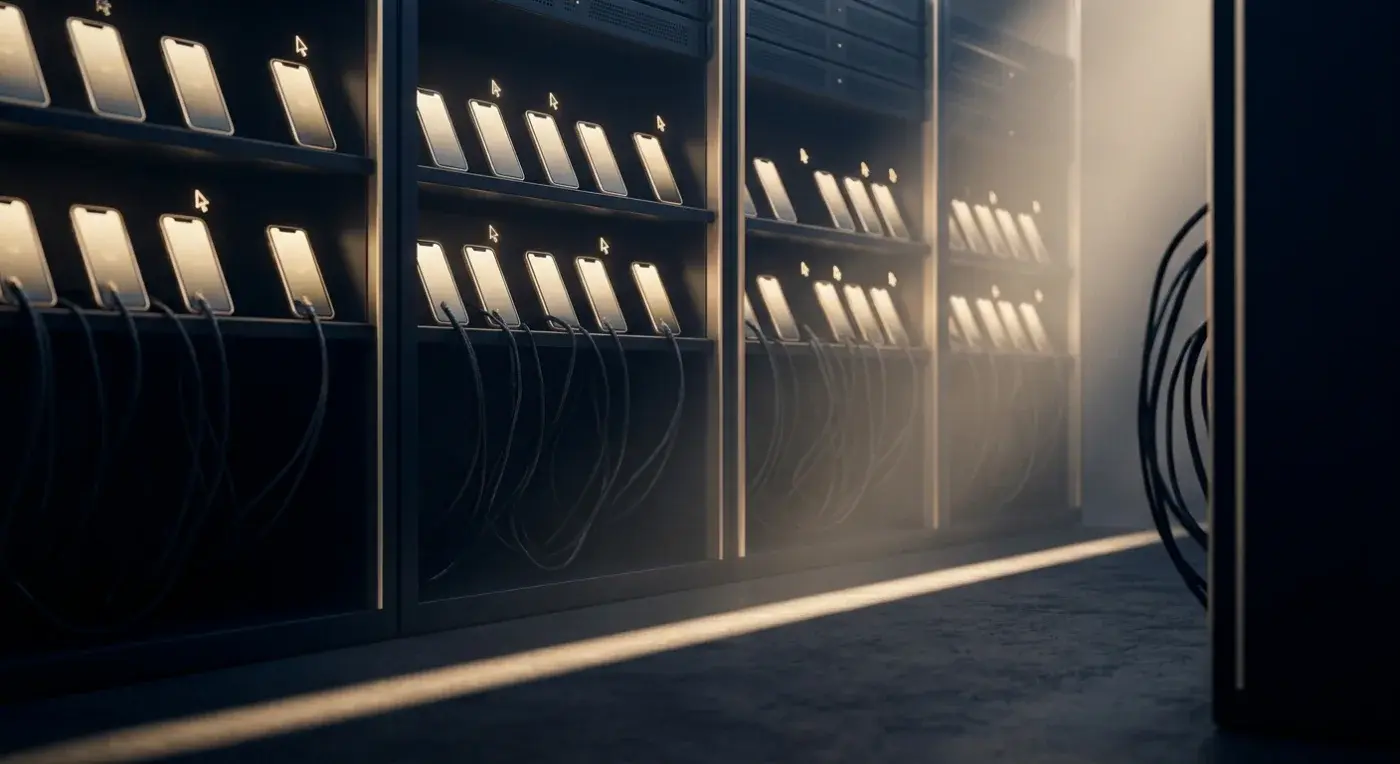
Racks of identical phones in a dark click farm

It isn't one bored person. It's an industry.

Someone is paying for those clicks, and they are not doing it by accident:

  • A competitor wants your budget gone

    Burn your daily cap by 10am and your ads go dark for the rest of the day — the hours people actually shop. Nobody can outbid you that cheaply.

  • A click farm gets paid per click

    Every click it delivers is billed to an advertiser. Yours. The farm spends a fraction of a cent to retire dollars of your budget.

  • Someone wants you to quit

    A channel that read 4× ROAS suddenly reads 0.4×. The owner pauses it, not the algorithm. That is the outcome the attack was built to produce.

WHY IT LOOKS LIKE YOUR SETTINGS

Five symptoms everyone blames on settings — and one cause.

Every line on the left is what a broken account looks like from the dashboard. None of it is caused by your settings.

Your budget is gone by 10am

Bots spend a day's budget in the morning, so your ads are off exactly when real buyers are shopping. It looks like the budget is too small. It is being spent on nobody.

Clicks are fine, sales are not

Fake clicks click and never convert. The ad looks healthy while your cost per sale quietly climbs.

Cost per click keeps rising

Google scores your account on what people do after the click. Bots behave badly, Quality Score falls, and you pay more for the same position.

Retargeting stopped working

Your audience lists fill with machines and your conversion data gets faked. Every campaign trained on that data inherits the problem.

Smart Bidding buys more junk

It learns from the traffic you give it. Feed it fake clicks and it goes looking for more traffic that behaves the same way.

None of this gets fixed in the settings. It gets fixed in the traffic.

THE NUMBERS, IN PLAIN ENGLISH

This isn't a leak in your account. It's a $172 billion industry.

Published 2026 measurements, no charts. Just what other people counted — and what it means for you.

5.58%

of all paid clicks were fraudulent

Roughly one click in eighteen was never a customer.

4.0 billion clicks measured, H1 2026 · Spider AF

$25.3B

lost to click fraud in six months

It grew faster than ad spend did.

H1 2026, on pace for over $50B this year · Spider AF

64.9%

of bad clicks came from repeat sources

The same offenders, again and again. That is why they can be blocked.

H1 2026 · Spider AF

+72%

more invalid traffic on AI Max campaigns

The newer the campaign type, the less filtering catches it.

vs standard search · Lunio, 2026

40%

of all internet traffic is bad bots

Your site is already being walked by machines every day.

Imperva / Thales, Bad Bot Report 2026

5.3%

of marketers run a fraud tool. 75.6% suspect it

Almost everyone suspects. Almost nobody measures. That is the gap we close.

Survey of 131 senior marketers, July 2026 · Lunio

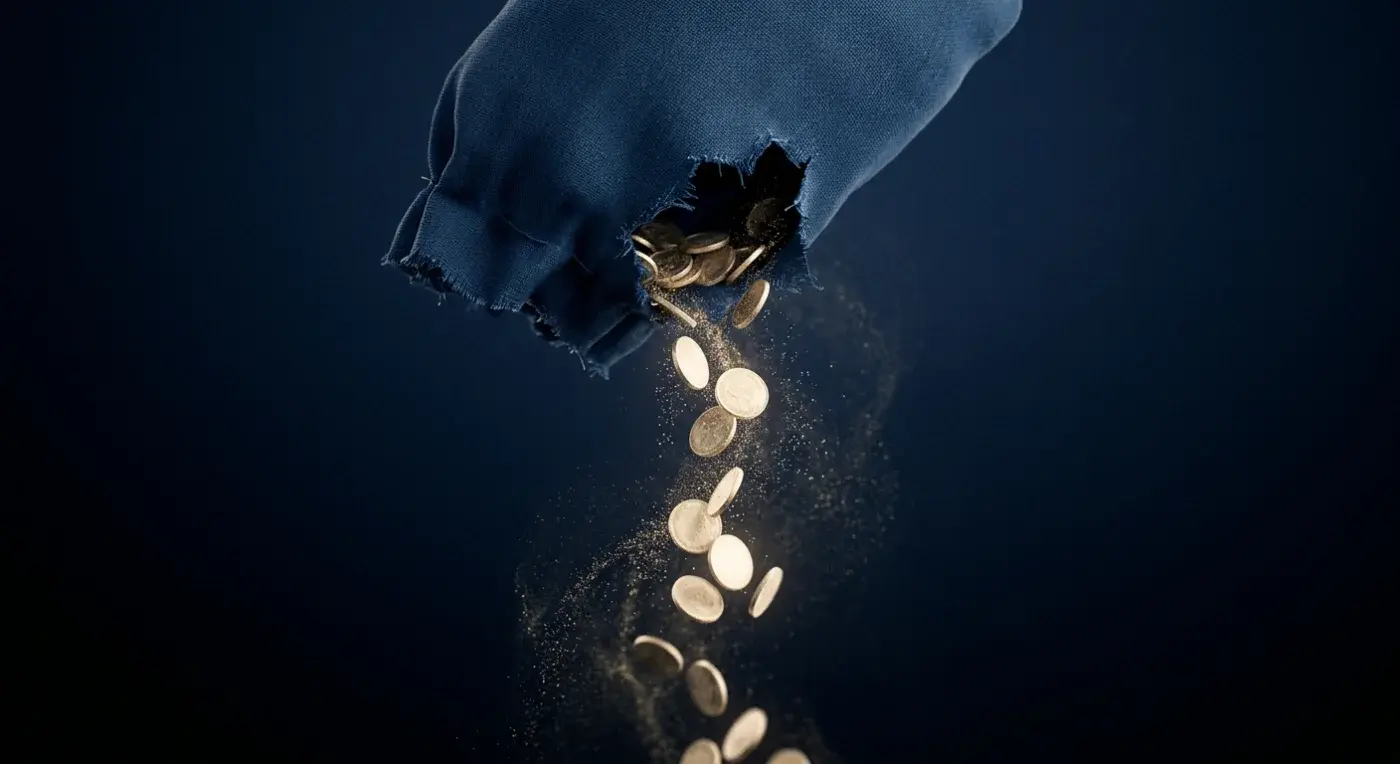
Gold coins pouring out of a torn sack into darkness

WHAT IT COSTS YOU

At 5.58%, fraud is your third-biggest line item.

Multiply your monthly Google Ads spend by the measured 5.58% fraud rate. This is a model, not a quote — what you actually recover depends on the evidence in your logs.

Monthly spendBurned on fake clicksOver a yearYou keep after 15%
$5,000$279$3,348$2,846
$25,000$1,395$16,740$14,229
$100,000$5,580$66,960$56,916
$250,000$13,950$167,400$142,290

Our fee is 15% of what Google credits back. If nothing is recovered, there is no recovery fee.

Industry rate for H1 2026 · Spider AF. Retail and automotive run higher. Your real rate is what the audit measures.

Check my account
An empty office at night with cursor arrows drifting around a glowing screen

THE SIGNS

Six things you can see yourself in an account paying for bots.

You don't need a tool for the first three. Open Google Ads, pick the last 30 days, and look.

  • Clicks between 1am and 5am, when nobody in your market is awake.
  • Visitors from cities or countries you don't serve.
  • Sessions that last under three seconds, over and over.
  • One visitor clicking the same ad several times a day.
  • Clicks that never scroll, never tap, never fill in a field.
  • Devices that click a lot and never once convert.

Three or more of those? You are paying for traffic that was never going to buy.

Get my clicks checked

WHAT WE DO

Four steps, and the money comes back.

We don't guess. We rebuild what happened on your site, click by click, from logs you already own — then take it to Google.

01

Read your own logs

No tag, no snippet, no waiting. Your server already recorded every click that arrived, including the ones your analytics never saw.

02

Prove which clicks were machines

The same visitor clicking four times. A browser switching mid-session. A session of zero seconds. One fingerprint shared by fifty devices. Every verdict carries its evidence, because Google will challenge anything you can't defend.

03

File the claim, then chase it

A claim with click-level evidence, filed inside Google's two-month window, escalated when the reply is a token credit, and reconciled against your billing until the credit lands.

04

Block the sources so it stops

Repeat offenders get excluded at network level, and you get an alert when a wave starts instead of a week later.

A glowing gold shield above a field of server racks

What that looked like in one pilot week

104

clicks rebuilt from the logs

103

of them were machines

1

real visitor

1/3

of that week credited by Google

Google credited about a third of the one documented week — around 2% of that month's spend. The evidence worked. The lesson was cadence: document every period and the credits compound. That is the part we automated.

IS THIS LEGITIMATE?

Yes. Google has a refund policy for exactly this.

It is called invalid clicks. The policy exists, the credit is real, and almost nobody claims it — because Google doesn't tell you where the bad clicks were.

Google credits invalid clicks

Its policy credits advertisers for clicks it finds invalid, for up to two months after you were charged for them.

It won't show you which ones

Google's support team declines to share click-level data, citing advertiser security. So the evidence has to come from your side of the click.

So you bring the proof

A claim without click-level evidence gets a small goodwill credit, or nothing. A claim with it gets reviewed by the invalid-traffic team.

Nobody breaks a rule

We file through your own support channel, with your authorisation. We never touch budgets, bids or campaigns.

PRICING

We get paid when you get paid.

The audit is free. Paid plans are a monthly fee you can cancel any time — the percentage is only ever taken out of what we recover.

Audit

Find out whether you have a claim at all.

Freeone period

Up to 10,000 clicks reconstructed.

  • One month of your traffic, rebuilt click by click
  • Your fraud rate and what it cost you
  • The exact clicks we would claim on
  • A claim letter you can file yourself
  • No tag install

Recover

MOST POPULAR

Coverage every billing period, filed for you.

15%of credited spend

+ $499/month, charged from today, cancel any time.

  • Everything in the audit, every month
  • Claim filed and escalated on your behalf
  • Credits reconciled against your billing
  • Blocklists and live fraud alerts
  • You keep 85% of everything recovered

Agency

For agencies carrying other people's budgets.

10%of credited spend

+ $1,499/month per account, white-label.

  • Everything in Recover, unlimited accounts
  • White-label evidence packs and letters
  • Portfolio view by client
  • API and webhook access
  • Priority escalation

STRAIGHT ANSWERS

The questions you should be asking

FIGURES AND SOURCES

Where every number comes from

  • Spider AF — First Half 2026 Ad Fraud Investigation Report

    4.006 billion clicks: 5.58% paid-click fraud rate, $25.3B lost in H1 2026, 64.9% of invalid clicks from repeat actors.

  • Lunio 2026 — invalid traffic study and survey

    AI Max carries 72% more invalid traffic than standard search (2.46% → 5.28%, Q4 2025 → Q2 2026) and produced 68% of detected invalid clicks in Google search. 131 senior marketers surveyed July 2026: 75.6% estimate bots take over 5% of budget, 5.3% run a dedicated tool.

  • Pixalate — Q2 2026 Global IVT and Ad Fraud Benchmarks

    Mobile apps 41%, connected TV 26%, desktop and mobile web 20% invalid traffic; United States 39% / 25% / 25%.

  • Imperva / Thales — Bad Bot Report 2026

    40% of all web traffic in 2025 was bad bots; 53% of traffic was automated.

  • Juniper Research — Ad Fraud 2023–2028

    $84B lost in 2023 (22% of online ad spend), forecast $172B by 2028.

  • Pilot audit and Google Ads correspondence

    One advertiser, one audit window, 16 runtime tables plus a post-processed fraud summary. Support replies quoted as written; the advertiser's identity is withheld.

All figures are third-party measurements across all advertisers, not forecasts or guarantees for any individual account. Recoveries depend on the evidence available for each account and are not guaranteed. ClickClaim is not affiliated with, endorsed by, or acting as an agent of Google. Google and Google Ads are trademarks of Google LLC.

START HERE

Find out what last month was actually worth.

Send one month of traffic, or just your landing page URL and your monthly spend. We'll rebuild the clicks we can see and tell you in writing whether there is a claim, and what it's worth. If there isn't one, you'll know that too.

Or email info@vianora.ai · ClickClaim is a Vianora AI product.

START HERE

Tell us where to look.

One month of traffic is enough for the audit. Pick a paid plan and we open Stripe next — card, bank or Link.

No card. We reply within one business day with what we found.

Payment opens on Stripe. We never see or store your card.